
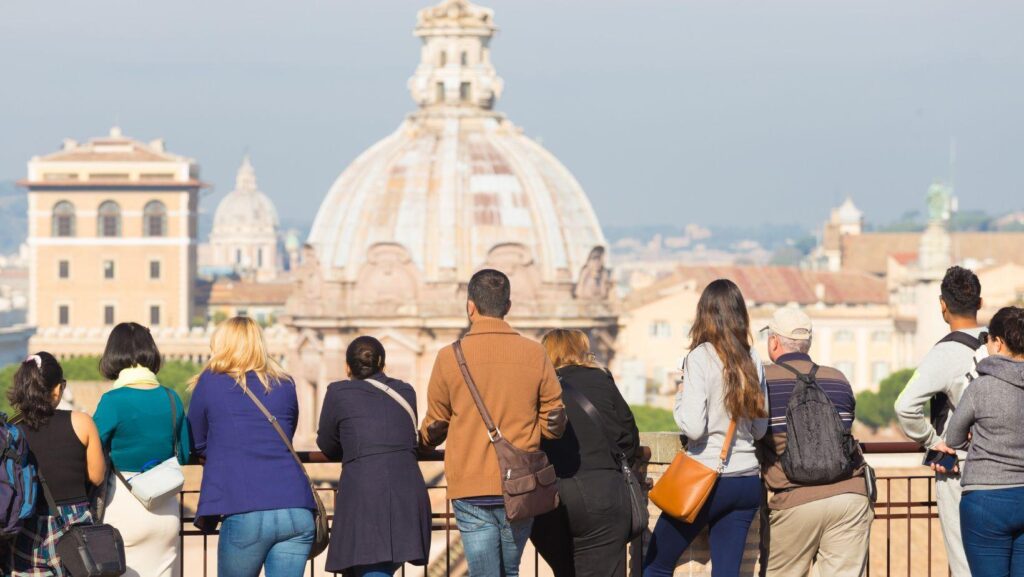
Booking a guided tour can save time in cities packed with museums, archaeological sites and monuments, such as Rome. The harder part is choosing the right format: a private tour gives you more control, while a small group tour usually costs less and still offers the help of a professional guide.
Companies such as Inside Out Italy offer both options across Rome, Vatican City and also Florence. The best choice, however, does not depend only on price; you should also consider how much attention you want from the guide, how quickly you walk and whether you want to adjust the visit around your interests.
How private tours in Italy work
A private tour is reserved for your party. You do not share the guide with strangers, so questions and explanations can focus on what actually interests you. In an art museum, for example, you might spend longer with Caravaggio or Michelangelo instead of giving the same amount of time to every room.
The pace is easier to manage as well, because families with children may need breaks, while visitors who already know Roman history might prefer a faster introduction and more time at a specific site. This flexibility is one of the main advantages of private tours in Italy, although access rules and ticket times still have to be respected.
Private tours make more sense when the place is complex: the Vatican Museums contain several collections and long galleries, while the Roman Forum can be difficult to understand without knowing how its ruins once fitted together.
What changes on a small group tour
Small group tours follow a set route and departure time, so they offer less freedom, but they are usually more affordable because the cost of the guide is shared among several people.
Group size matters too: a tour with eight or ten participants feels very different from one with thirty. In a smaller group, it is easier to hear the guide, ask questions and move through busy spaces without constantly waiting for other people.
For first-time visitors who want a clear introduction to a landmark, small group tours often provide the best balance. You still receive historical context and practical guidance, but you do not pay the full price of a private service.
When private tours of Rome are worth the extra cost
Many private tours of Rome cover places that require planning before the visit. The Colosseum, Vatican Museums and Borghese Gallery use timed admission, while some tickets are linked to a named visitor. A guide cannot remove security checks or change official rules, but a well-organised tour can reduce confusion over meeting points, entrances and the order of the visit.
Rome private tours are especially useful when a group has a strong interest in archaeology, Renaissance art or Baroque architecture. They also work well for families, multigenerational groups and travellers with limited time, because the explanation can be adjusted instead of following a general script.
A private guide does not automatically mean a completely custom itinerary, though. Before booking, check which sites and tickets are included, how long the tour lasts and whether changes can be requested in advance.
Private and small group tours compared by cost
Private tours are priced for the guide’s exclusive time, so the total cost is higher. The difference becomes smaller when four or five people travel together and divide the price among themselves.
A small group tour is normally better for solo travellers and couples who want expert guidance without paying for exclusivity. A semi-private tour sits between the two: the number of participants is limited, but the guide is still shared. Local agencies such as Inside Out Italy include private, semi-private and small group experiences, which makes it possible to compare formats before deciding.
How to make the right choice
Choose a private tour when personal attention, control over the pace and detailed discussion matter most; pick a small group when you want a structured visit at a lower cost and do not mind following a fixed schedule.
Whichever option you prefer, check the real group size, cancellation terms, admission tickets and accessibility before paying. The right tour is not simply the most expensive or the longest; it is the one that matches the way you want to experience the city.